The Role of Robotics in Infarmight’s Automated Systems
The global food system faces a confluence of challenges: a rapidly growing population, climate change, and dwindling arable land. The traditional model of agriculture, with its heavy reliance on vast tracts of land and unpredictable weather, is increasingly unsustainable. Enter Infarmight, a visionary smart farm company that is redefining food production through the power of vertical farming and, most critically, advanced automation and robotics. The true revolution at Infarmight is not just growing food indoors; it is the complete, systematic removal of human variability and inefficiency from the cultivation process, making robotics the very backbone of their operation.
The Imperative of Automation in Vertical Farming
Vertical farming offers a compelling solution to the spatial and environmental constraints of traditional agriculture. By stacking crops in layers within a controlled environment, it drastically reduces water usage and eliminates the need for pesticides. However, the sheer density and complexity of a multi-layered farm present a unique set of logistical challenges. A single Infarmight facility can house thousands of individual plant trays, each requiring precise, individualized care—a task far too monotonous, precise, and demanding for human labor to handle efficiently or consistently.
This is where automation becomes an imperative, not a luxury. Robots ensure 24/7 operation, unparalleled precision, and complete consistency across every single plant. They navigate the vertical landscape, performing tasks with sub-millimeter accuracy that would be impossible for a human worker, thereby maximizing yield and minimizing waste.
Precision Robotics: From Seed to Harvest
Infarmight’s facilities are a symphony of synchronized robotic movements, each designed for a specific stage of the plant lifecycle.
Automated Seeding and Transplanting
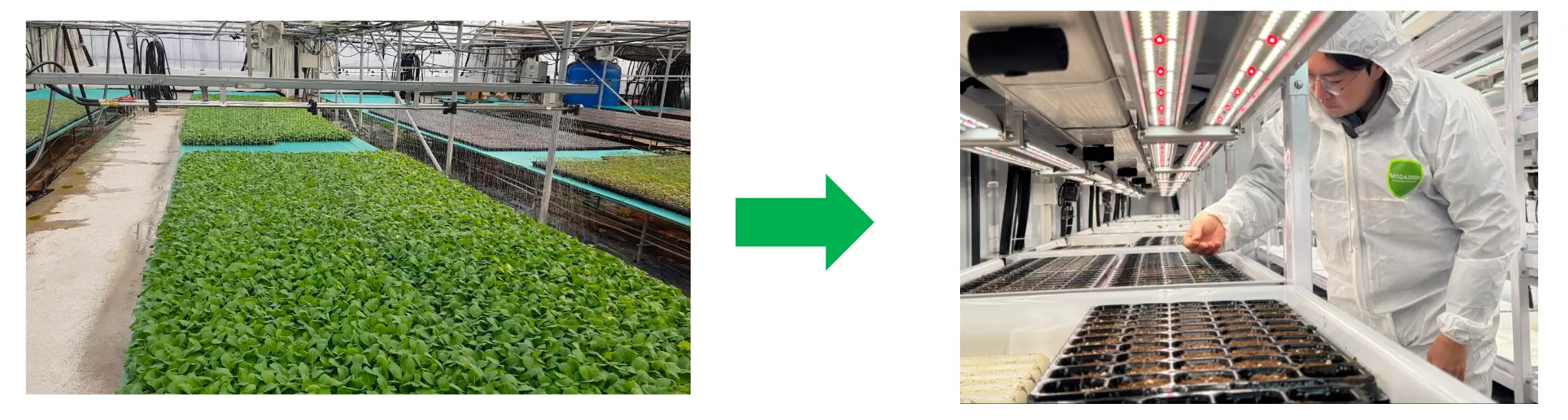
The process begins with micro-robotics. Tiny, high-speed robotic arms are responsible for the delicate task of seeding and transplanting. These systems use vacuum grippers and precision dispensers to place seeds and young seedlings into their growth mediums. This automation eliminates the risk of human error and contamination, ensuring a perfect start for every plant.
The Logistics Backbone: Automated Guided Vehicles (AGVs)
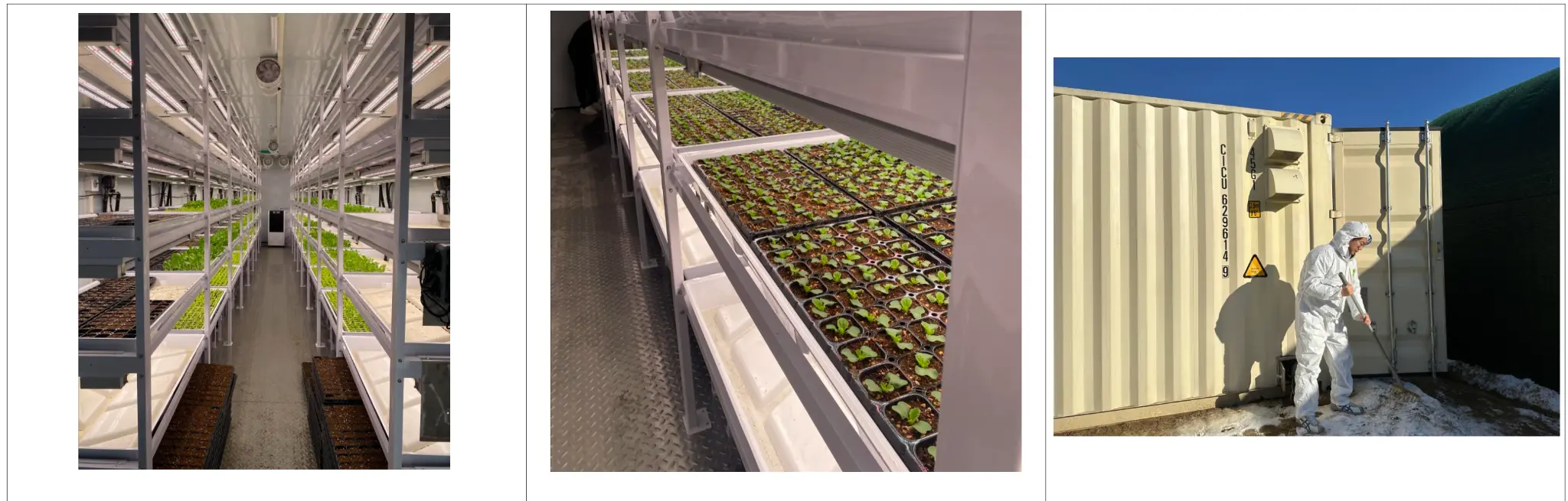
Once planted, the trays are moved through the facility by a network of Automated Guided Vehicles (AGVs) or sophisticated rail-based systems. These robots act as the internal logistics network, transporting trays between different zones—from germination to vegetative growth, and finally to harvesting. The AGVs are guided by a central AI system that calculates the most efficient path and schedule, ensuring that each plant receives its optimal light and nutrient exposure at the exact right time.
Robotic Harvesting Systems
Harvesting is perhaps the most visually impressive robotic operation. Infarmight employs specialized robotic arms equipped with machine vision and advanced sensors. The vision system identifies plants that have reached peak maturity based on color, size, and leaf structure. The robotic arm then executes a clean, precise cut, minimizing damage to the plant and ensuring the highest quality product. This system can harvest a tray in seconds, a fraction of the time it would take a human, and with zero fatigue.
The Brain: AI-Driven Optimization
The hardware of robotics is only as good as the software that controls it. Infarmight’s automation is orchestrated by a powerful Artificial Intelligence (AI) and Machine Learning (ML) platform, which acts as the farm’s central nervous system.
Machine Vision for Plant Health
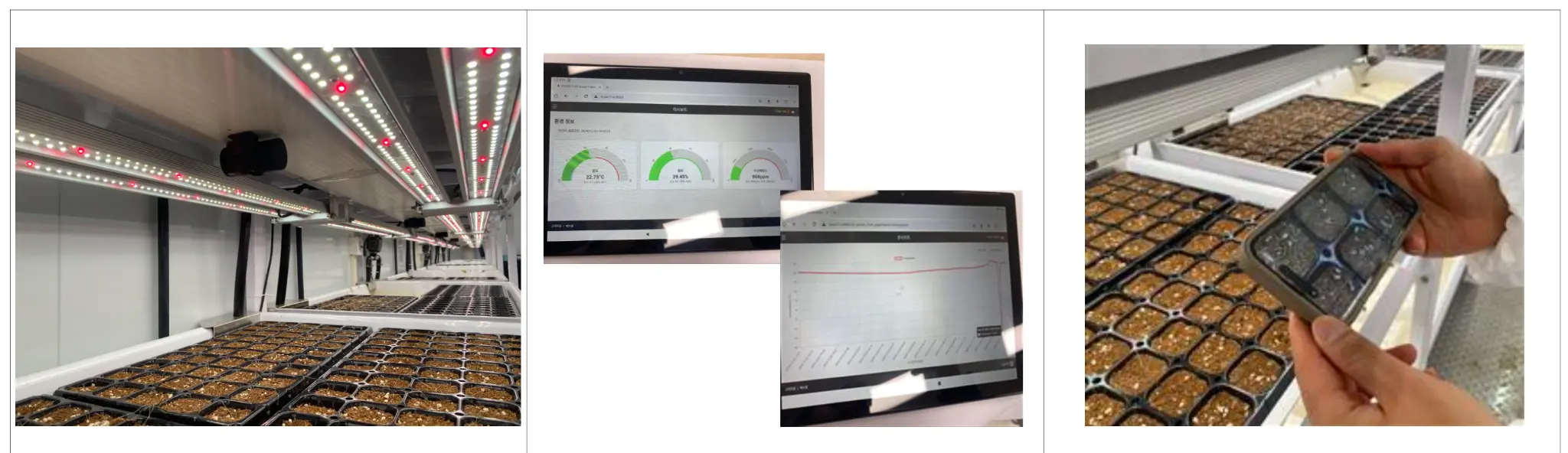
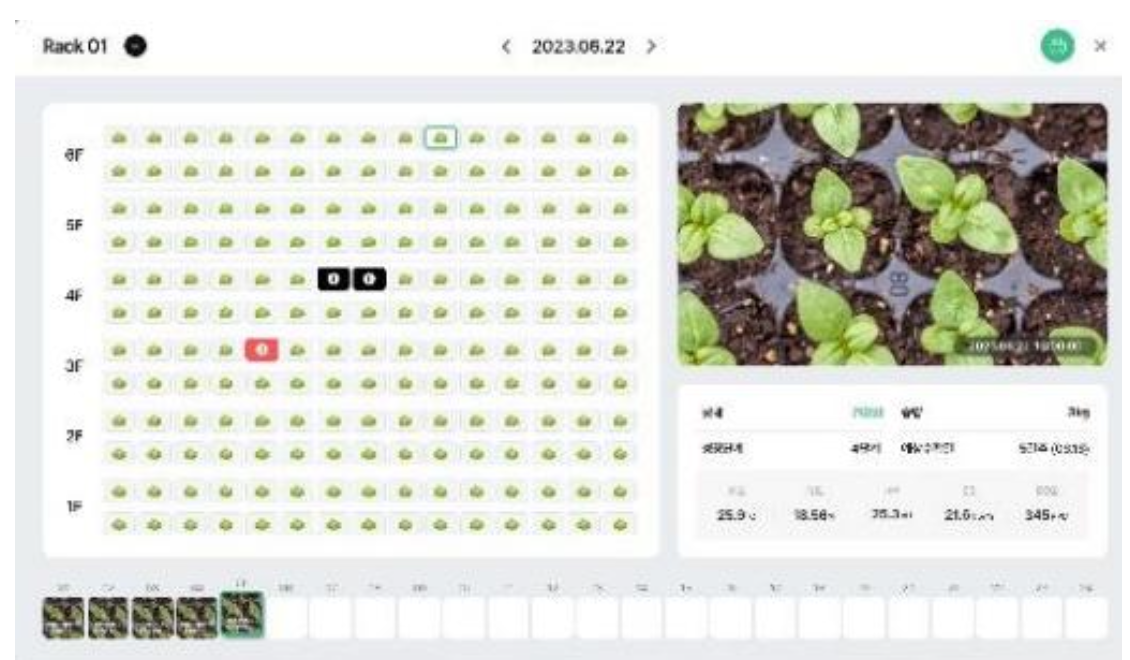
Every robotic movement is an opportunity for data collection. As the AGVs move trays, high-resolution cameras and multispectral sensors scan every plant. The AI uses machine vision algorithms to analyze these images, looking for the earliest signs of stress, disease, or nutrient deficiency—often long before a human eye could detect them. If a problem is identified, the AI directs a specialized maintenance robot to isolate the affected tray and apply a targeted, micro-dose solution, preventing the issue from spreading.
Dynamic Growth Recipe Adjustment
The ML component continuously processes billions of data points—from nutrient uptake rates and light spectrum efficacy to humidity levels and growth speed. This allows the system to dynamically adjust the “growth recipe” for each batch of crops. If the AI determines that a slight increase in blue light or a minor adjustment to the potassium level will accelerate growth without compromising quality, it automatically instructs the nutrient delivery and LED lighting robots to make the change. This constant, data-driven optimization is the key to Infarmight’s superior yields and flavor profiles.
Economic and Environmental Transformation
The integration of robotics is not just a technological marvel; it is a fundamental shift in the economics and sustainability of food production.
Operational Efficiency and Cost Reduction
While the initial investment in robotic infrastructure is significant, the long-term operational savings are transformative. Robotics drastically reduces the need for manual labor, which is a major cost factor in traditional agriculture. Furthermore, the precision of the automated systems minimizes waste—less water, less nutrient runoff, and fewer spoiled crops.
The following table illustrates the dramatic difference in resource utilization enabled by Infarmight’s automated vertical farms compared to conventional open-field farming:
| Metric | Conventional Farming | Infarmight Automated Vertical Farm | Impact of Robotics/Automation |
|---|---|---|---|
| Land Use | 100% | < 1% (per unit of yield) | Stacking and high-density logistics |
| Water Use | 100% | 5% – 10% | Closed-loop recycling and precision delivery |
| Pesticide Use | High | 0% | Controlled environment and automated isolation |
| Labor Cost | High | Low (Skilled technicians only) | Full automation of repetitive tasks |
| Yield Consistency | Variable (Weather-dependent) | Near 100% | AI-driven environment control |
| Transportation Distance | Long (Global) | Short (Local/Urban) | Decentralized, automated facilities |
Sustainability and Resilience
By enabling decentralized, urban farming, Infarmight’s robotics cut down on the massive carbon footprint associated with long-distance food transportation. The closed-loop systems, managed by automated nutrient delivery robots, ensure that water and nutrients are recycled with near-perfect efficiency. This level of control makes the food supply chain incredibly resilient, immune to droughts, floods, and seasonal changes.
The Future: Lights-Out Farming and Swarm Robotics
Infarmight is not resting on its current achievements. The company’s research and development is focused on pushing the boundaries of autonomy even further.
Swarm Robotics and Maintenance
The next generation of Infarmight facilities will feature swarm robotics—small, modular, and highly specialized robots that work collaboratively. Imagine tiny, autonomous drones that perform detailed leaf-level inspections or micro-bots that can perform on-the-spot maintenance and repair of the infrastructure. This level of distributed intelligence will ensure that the farm is not only automated but also self-healing and self-optimizing.
Expansion and Global Scale
The standardized, modular nature of Infarmight’s robotic systems means that their farms can be rapidly deployed anywhere in the world, from arid deserts to dense urban centers. The automation platform ensures that a farm in Tokyo operates with the exact same efficiency and precision as a farm in London, making global scaling a matter of logistics, not agricultural adaptation.
Conclusion: The Dawn of the Agri-Tech Era
The story of Infarmight is a powerful testament to the transformative potential of robotics and automation in agriculture. By embracing a fully automated, data-driven approach, the company has moved beyond simply improving traditional farming; it has created an entirely new paradigm. Robotics are the hands, the eyes, and the feet of the modern farm, executing the complex, precise instructions of an AI brain. Infarmight is not just growing food; it is cultivating a future where food security is decoupled from environmental volatility, proving that the most sustainable farm is one that runs itself. The role of robotics in this vision is clear: they are the indispensable engineers of the next agricultural revolution.
